Ramps & Bumpers
Build a ramp or a bumper to change a ball's speed or direction. A narrated pushes-and-pulls lab for kindergarten.
“Ramps and Bumpers! Build a ramp or a bumper to change how a ball rolls.”
In the lab
What your child does
Finds that a ball on a flat floor needs a push or a ramp; tests a low, a middle and a high ramp and compares how far the ball goes; designs a ramp that stops the ball on a target ("too short", "too far", "just right"); then places and turns a bumper so a rolling ball turns into a basket.
- 1
Wonder
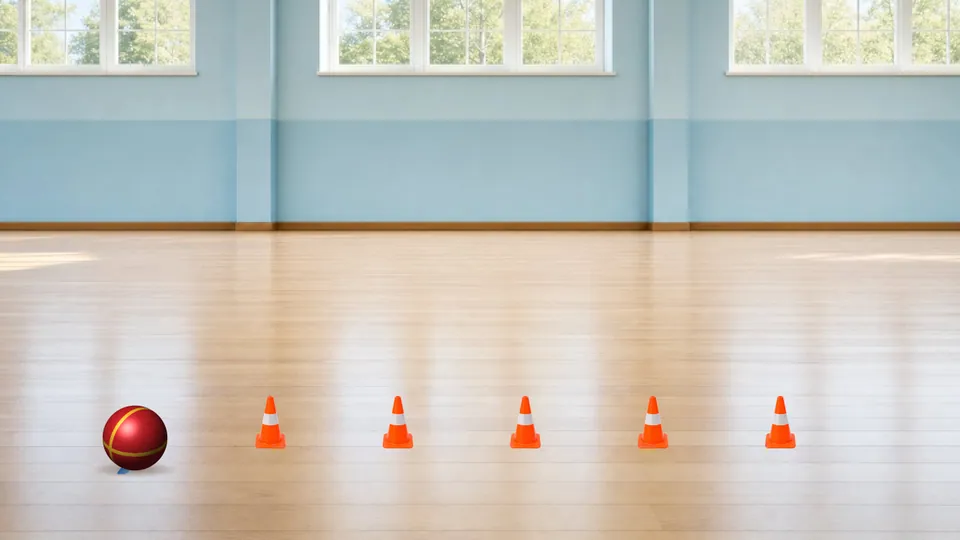
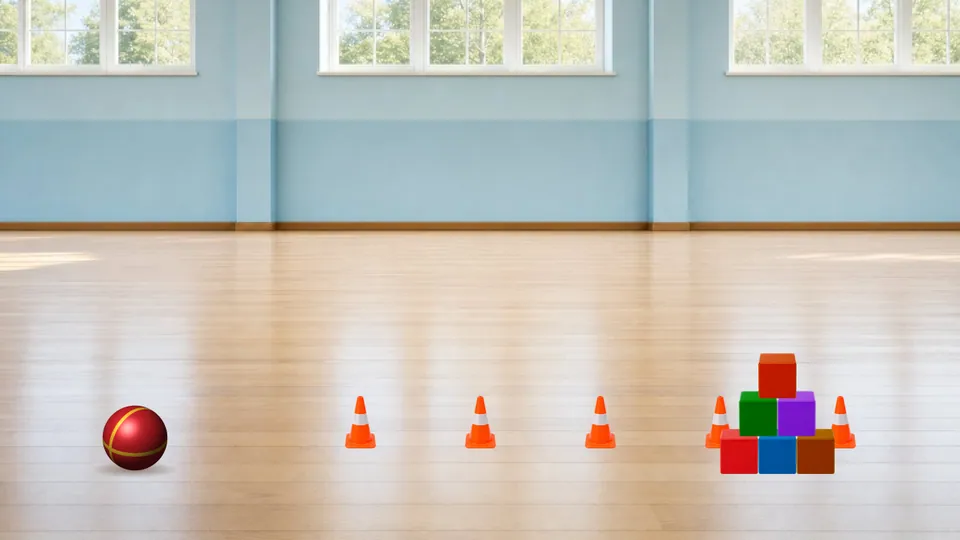
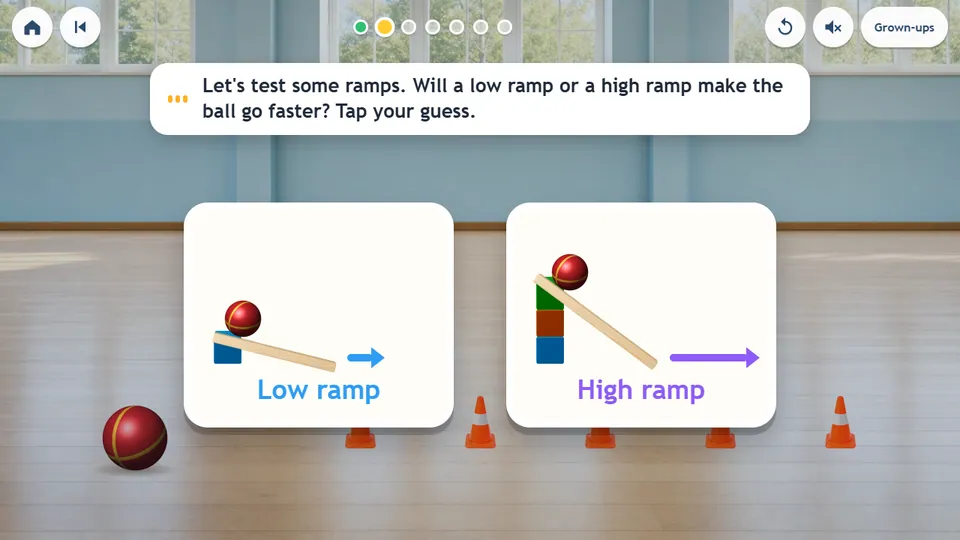
On a flat floor the ball just sits there. On a ramp it rolls fast enough to knock down a tower.
- 2
Guess
Will a low or a high ramp make the ball go faster?
- 3
Test
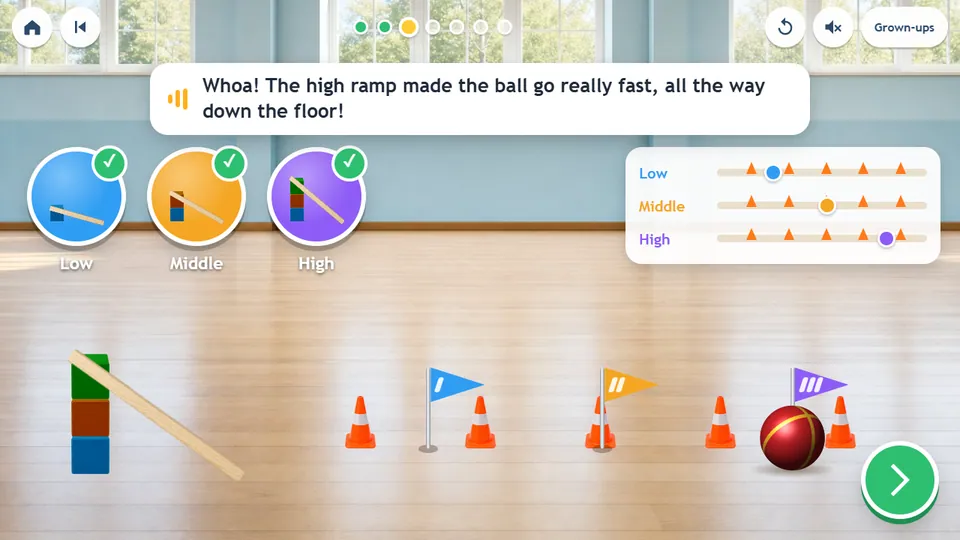
Low (1 block), middle (2) and high (3) ramps. A flag marks each stop; the chart fills in.
- 4
Think
"Which ramp went farthest?" Then: was your guess right?
- 5
Design
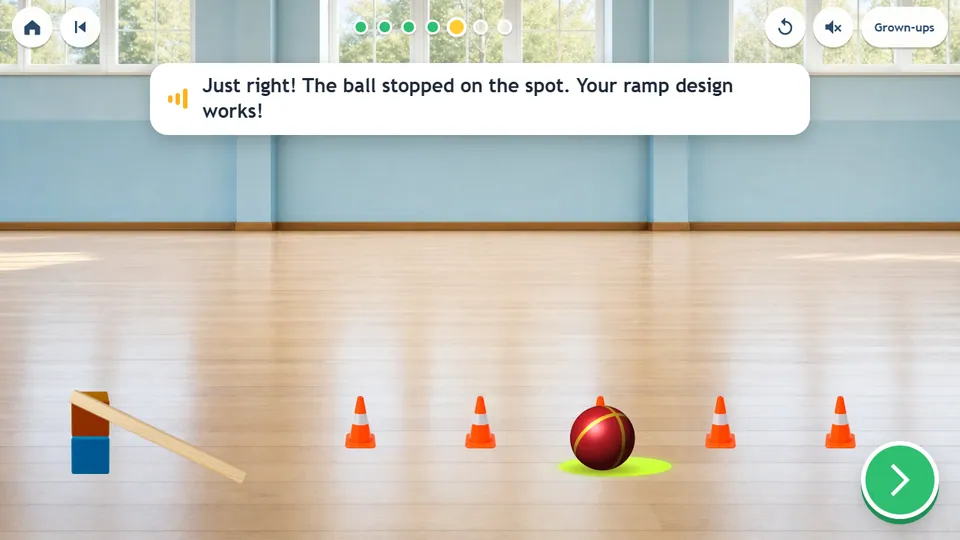
Build the ramp that stops the ball on the green spot: too short, too far, or just right.
- 6
Bumper
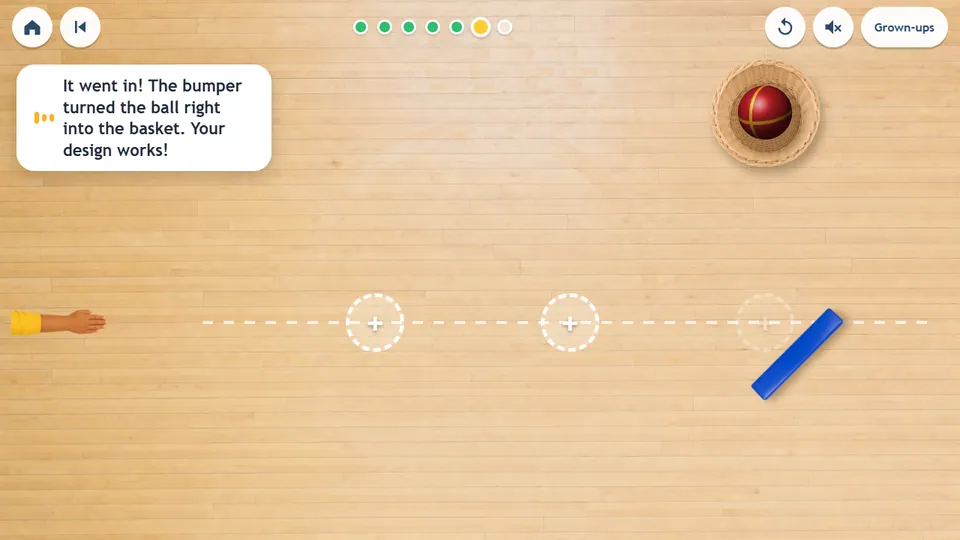
The ball rolls straight past the basket. Place a bumper (and turn it) so the ball turns in. Two puzzles.
Badge
The big ideas in a sentence, a badge, and a printable lab record.
The standard
K-PS2-2*
Children look at what happened to decide whether a design, like a ramp or a bumper, does what it was meant to do: change an object's speed or direction.
Read K-PS2-2 on nextgenscience.orgFor grown-ups
Talk about it
- "How did you know your ramp worked?"
- "What would you change if the ball went too far?"
- "Where else do you see ramps or bumpers?" (slides, driveways, bowling bumpers)
Try it for real
Lean a board or a big book on 1, 2 and 3 books, roll a ball down each, and mark where it stops. Then use a shoebox lid as a bumper to turn the ball into a laundry basket.
Pushes & Pulls