 Free
Ages 5–6 · 8 labs · every NGSS* Kindergarten standard
Kindergarten Science Labs
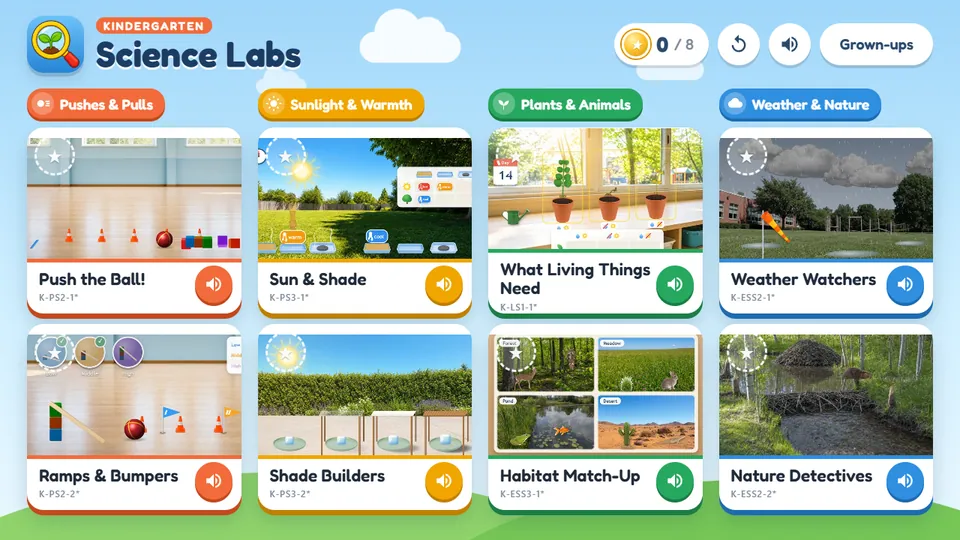
Eight short, narrated investigations - pushes and ramps, sunshine and shade, plants and pets, weather and beavers. Children do the science themselves, one tap at a time, and every word is read aloud.
8labs, one per standard
10–15minutes each
100%narrated with captions
$0to try Push the Ball!
The labs
Four big ideas, two labs each.
Each group pairs an investigation with a design challenge or a model, the way the standards do.
Pushes & Pulls
Sunlight & Warmth
Plants & Animals
Weather & Nature
Standards
Every Kindergarten performance expectation, covered.
Kindergarten Science Labs has one lab for each of the 8 NGSS* Kindergarten performance expectations.
| Standard | Lab | What it covers | Practice |
|---|---|---|---|
| K-PS2-1* | Push the Ball! Free | Children plan and carry out a simple investigation comparing what pushes of different strengths and different directions do to an object's motion. | Planning and Carrying Out Investigations |
| K-PS2-2* | Ramps & Bumpers | Children look at what happened to decide whether a design, like a ramp or a bumper, does what it was meant to do: change an object's speed or direction. | Analyzing and Interpreting Data |
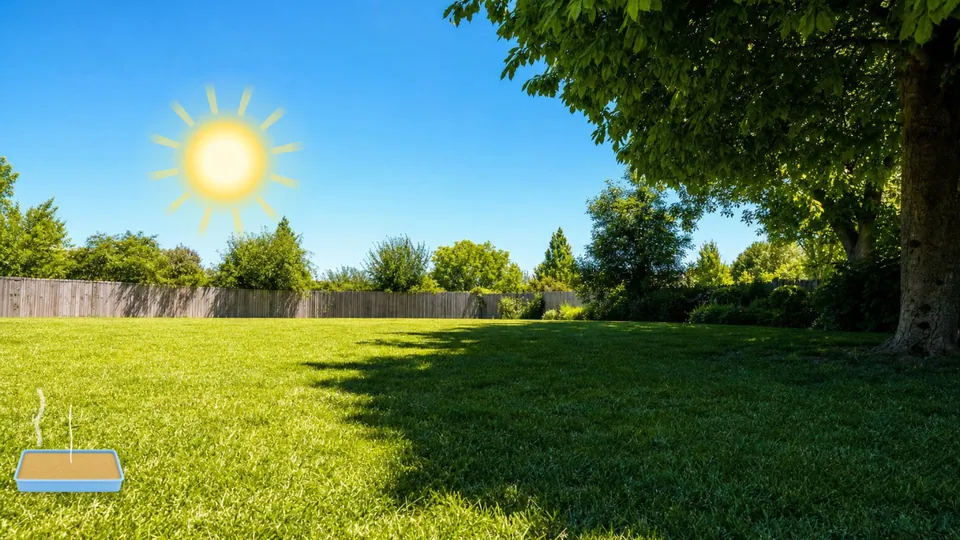
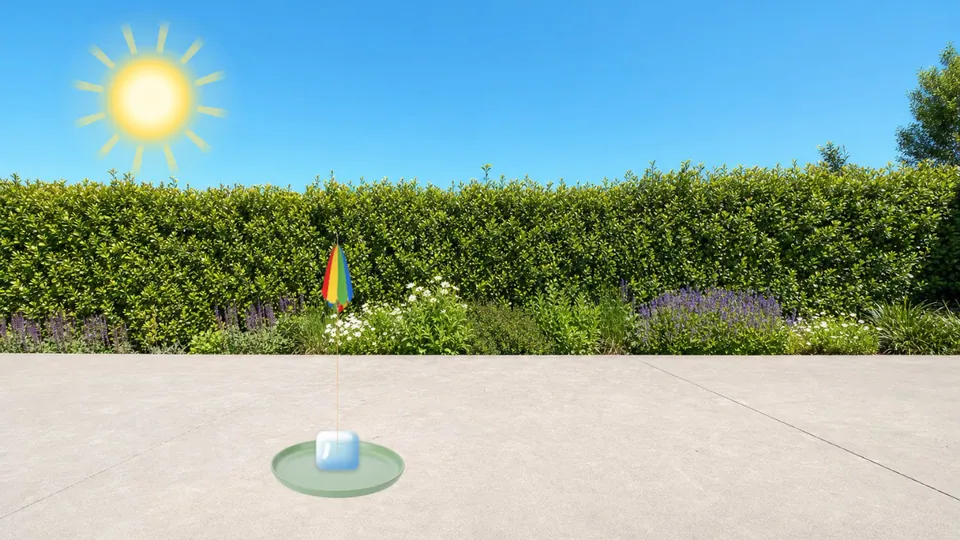
| K-PS3-1* | Sun & Shade | Children make observations to find out what sunlight does to Earth's surface (sand, soil, rocks and water). Temperature stays relative: cooler, warmer, hot. No numbers. | Planning and Carrying Out Investigations |
| K-PS3-2* | Shade Builders | Children use tools and materials to design and build a structure (like an umbrella, canopy or tent) that reduces the warming effect of sunlight on an area. | Constructing Explanations and Designing Solutions |
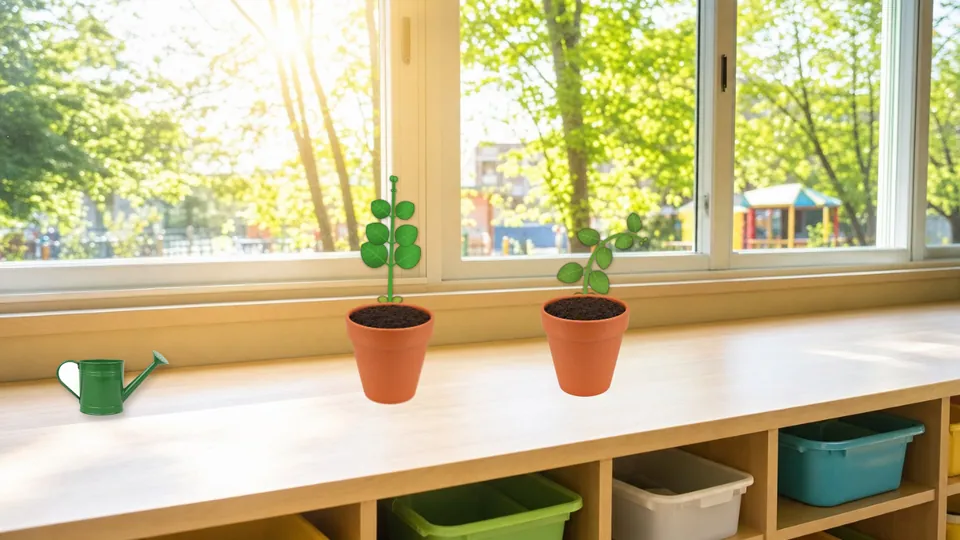
| K-LS1-1* | What Living Things Need | Children use observations to describe patterns in what plants and animals (including people) need to survive: plants need light and water, animals take in food, and all living things need water. | Analyzing and Interpreting Data |
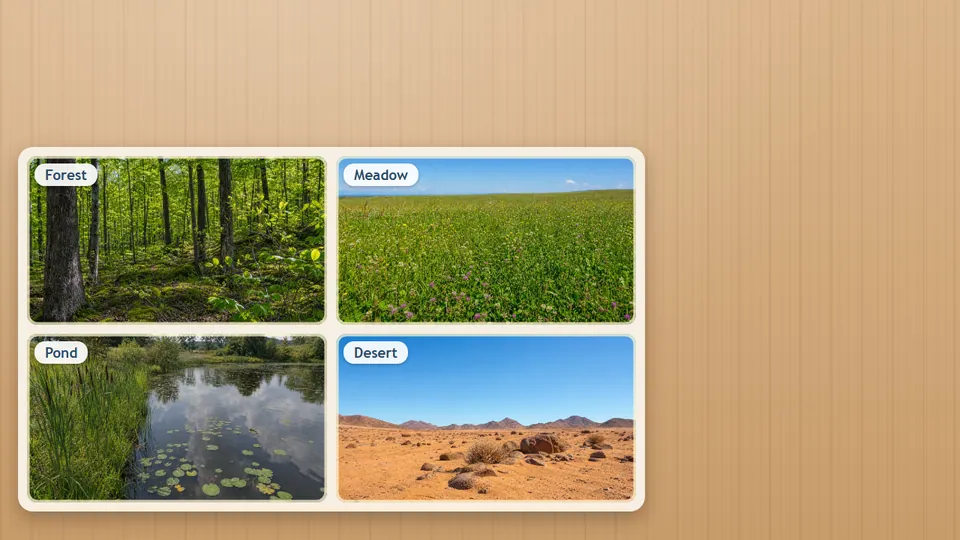
| K-ESS3-1* | Habitat Match-Up | Children use a model to show how the needs of different plants and animals (including people) relate to the places they live. For example, deer eat buds and leaves, so they usually live in forests; grasses need sunlight, so they often grow in meadows. | Developing and Using Models |
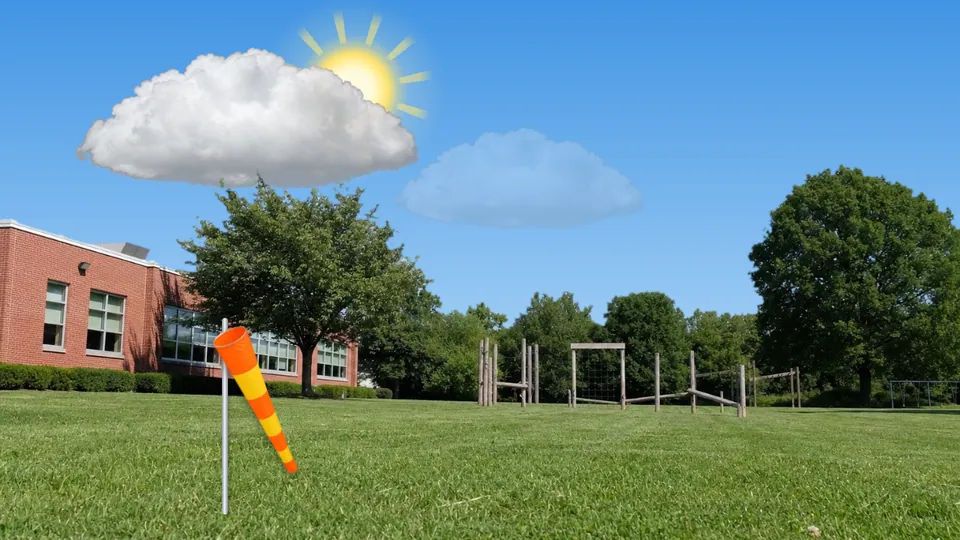
| K-ESS2-1* | Weather Watchers | Children use and share observations of local weather to describe patterns over time, such as counting sunny, cloudy, rainy and windy days, or noticing that mornings are usually cooler than afternoons. Counts are whole numbers; temperature is only warmer or cooler. | Analyzing and Interpreting Data |
| K-ESS2-2* | Nature Detectives | Children construct an argument, supported by evidence, for how plants and animals (including people) can change their environment to meet their needs. | Engaging in Argument from Evidence |
Every lab
The same steps, every time.
Young children learn the routine of an investigation by doing it again and again.
- 1
Wonder
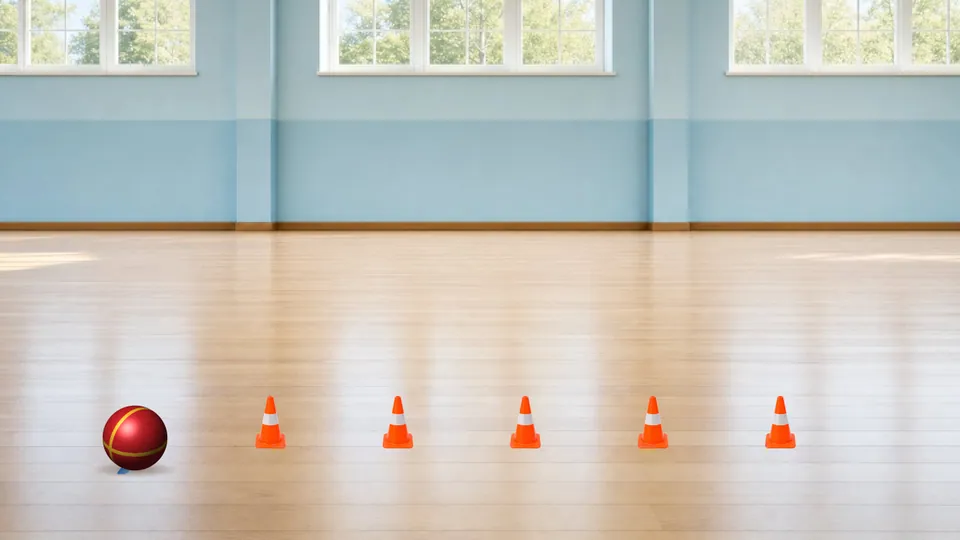
A short, real scene to notice something. Tap the hand, and a push makes the ball roll.
- 2
Guess
Before testing, children make a prediction by tapping a picture: will a soft or a hard push go farther?
- 3
Test
They run the experiment themselves. Flags mark where each push stopped and a picture chart fills in.
- 4
Think
The narrator asks what happened and why, and checks the guess. Scientists test their ideas.
- 5
Challenge
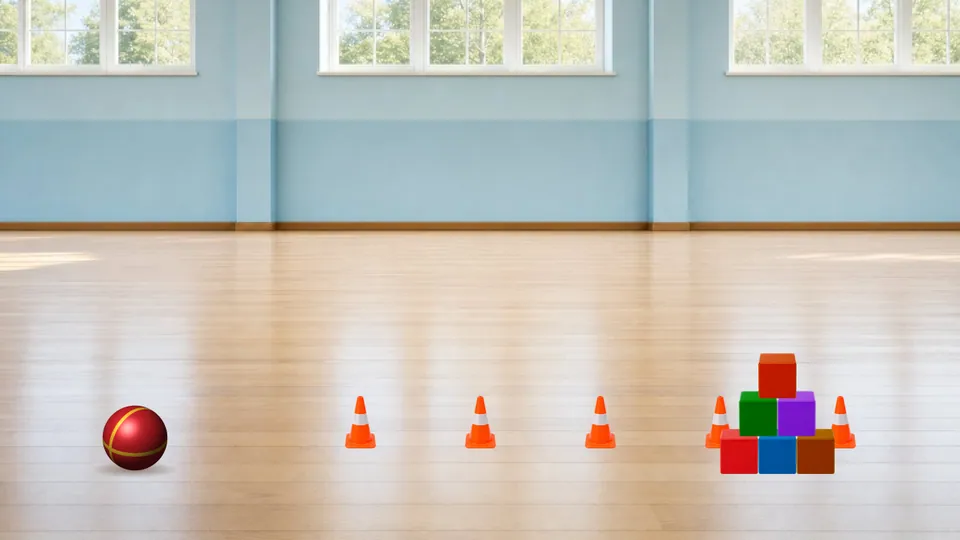
A small problem to solve with the new idea: which push knocks the tower down?
- 6
Badge
The big ideas in one sentence, a badge, and a lab record to print or save.
Plans
Pay once. All the labs.
Updates to the labs are included. Prices in US dollars.
Try it free
One full lab, no sign-up.
$0
- Push the Ball! (K-PS2-1*)
- Every line narrated
- Badge and printable lab record
Family
For one family at home.
$19 one-time
- All 8 labs, and updates to them
- Every child in your home
- Up to 5 devices
Unlocked on this device
Classroom & Co-op
For one class, co-op or tutoring group.
$49 one-time
- Everything in Family
- One class or co-op group
- Up to 30 devices
Unlocked on this device
Secure checkout by Gumroad · card or PayPal · tax added where it applies · 30-day refund
Where it plays
Any browser. Or offline.
In any browser
Open k5stem.com/play/kindergarten on an iPad, Android tablet, Chromebook, Windows PC or Mac. On an iPad, tap Share → Add to Home Screen to keep it one tap away.
Offline, in Chrome and Edge
Install the free Kindergarten Science Labs extension from the Chrome Web Store. All 8 labs are inside it, so once it's unlocked it runs without an internet connection - handy on school Chromebooks. Push the Ball! is free there too, and the same license key opens the rest.
Questions
Good to know
My child can't read yet. Can they really use the labs on their own?
Yes - that's what they're built for. Every line is spoken aloud and shown as a caption, and children tap big pictures instead of typing. Sit with them for the first lab; after that most 5- and 6-year-olds explore happily with a grown-up nearby.
What devices does it work on?
Any modern web browser: iPad and iPhone (Safari), Android tablets, Chromebooks, Windows and Mac. Open k5stem.com/play/kindergarten - there's nothing to install and no account to make. Turn the sound on: the labs are narrated. On Chromebooks, Windows and Mac you can also install the free Chrome extension, which works offline.
How long does a lab take?
About 10 to 15 minutes. Each one is a short investigation - wonder, guess, test, think - followed by a small challenge, a badge and a printable lab record. Children can stop and start again any time.
Are the labs aligned to the standards?
Each lab targets one of the 8 NGSS* Kindergarten performance expectations - together they cover the whole Kindergarten year. Every lab page names its standard, the science practice it uses, and links to the official text.
Is it real science, or just a game?
It's a simulation built to behave like the real thing: a harder push really rolls farther, water really warms more slowly than sand, a plant kept in the dark really grows tall, thin and pale. The science is simplified so the main idea stands out, and every lab suggests a real hands-on activity to try afterwards.
What about Grades 1 to 5?
They're in the works - one lab for every NGSS* performance expectation from Grade 1 to Grade 5. The lab map shows what's planned. Follow K5 STEM on Gumroad to hear when a new grade is ready.